

Stormwater
Located at the downstream end of multiple watersheds, Pleasanton relies on an interconnected stormwater drainage system to safely and effectively capture and convey runoff during wet weather events. The City proactively operates and maintains its stormwater drainage and conveyance system, which includes approximately 228 miles of storm drain pipelines, four pump stations, and numerous inlets, culverts, manholes, outfalls, trash capture devices, and other drainage facilities.
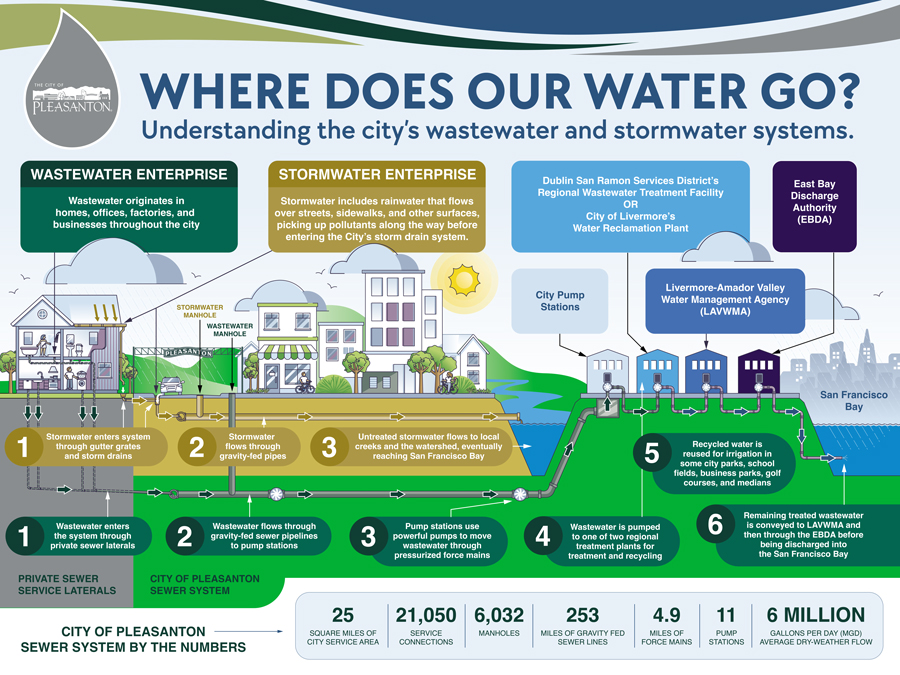
The City’s stormwater system is complex and requires ongoing coordination with other agencies and property owners to ensure that drainageways are ready to receive wet weather flows. Most stormwater collected by the City’s system flows into larger creeks and channels operated and maintained by the Zone 7 Water Agency, while a smaller portion flows through City-owned stream corridors and detention basins. Private landowners or Homeowners’ Associations also maintain some local drainageways and creeks. Together, these local and regional facilities move stormwater runoff through and away from neighborhoods, businesses, and public infrastructure. Pleasanton’s stormwater system has been developed over time alongside residential and commercial development.
Stormwater management is multi-faceted. The City takes a proactive approach to wet season preparedness by performing storm drain and waterway maintenance, ensuring supplies are on hand for City staff and the public to protect their properties, actively monitoring weather forecasts, and partnering with local agencies on pre-season preparedness activities. The City is also investing in a Stormwater Management Plan to help City staff prioritize investments in the storm drainage system to best protect residents from flooding.
Stormwater Management Plan
In recent years, Pleasanton has experienced significant storm events. Severe storms in 2017 and 2023 caused flooding, downed trees, power outages, and damage to stormwater infrastructure throughout the City.
Since then, the City has been completing more than $16 million in storm-related repairs and drainage improvements, including projects at Puri Court, Sycamore Creek, storm-damaged outfalls and channels, and culverts at Augustin Bernal Park.
Looking ahead, the City is developing its first comprehensive Stormwater System Management Plan (SWMP) to better understand the condition, capacity, and long-term needs of Pleasanton’s stormwater infrastructure. The Plan will include a systemwide asset inventory, condition assessments, hydraulic modeling, and a prioritized 20-year Capital Improvement Plan to guide future maintenance, rehabilitation, and infrastructure investments.
Together, these efforts will enable Pleasanton to take a proactive, financially responsible approach to managing and reinvesting in the City’s critical stormwater infrastructure.
Storm Watch
Each year, ahead of the wet season, the City performs proactive maintenance activities to prepare its stormwater system and response teams. This year, with forecasters tracking a very strong El Niño, Pleasanton is building on those annual efforts by focusing on critical locations and coordinating closely with regional partners for the wet season ahead.
Current efforts include:
- Inspecting critical drainage facilities to identify debris, sediment, and other conditions that could restrict water flow or require maintenance and repair.
- Cleaning storm drains and culverts using specialized vacuum and jetting equipment to remove sediment, leaves, trash, and debris.
- Clearing leaves and organic material through seasonal leaf collection and street sweeping to help prevent buildup in streets and storm drains.
- Coordinating storm response efforts across City departments and with regional partners to identify areas of concern, monitor priority locations, and respond as conditions develop.
What you can do to help prepare
In addition to the City’s efforts, residents and businesses can play an important role in keeping Pleasanton’s streets clean, storm drains clear, and local waterways protected.
Stormwater runoff can pick up trash, chemicals, oils, sediment, and other pollutants before flowing untreated into local creeks, wetlands, and eventually the Bay. Through education, regional coordination, and pollution prevention programs, the City’s Clean Water Program works to prevent stormwater pollution.
By regularly inspecting and maintaining your property and keeping debris and pollutants out of storm drains, you can help protect local waterways and reduce the potential for localized flooding during wet conditions. Simple steps include:
- Keeping leaves and yard debris out of streets and gutters. Do not blow or sweep leaves into the street. Instead, gather them and dispose of them properly. Property owners are responsible for leaves and other yard waste on their property, including leaves from City trees that fall onto their property.
- Checking drainage around your property. Clear private gutters, drains, and downspouts, and look for areas where water may collect.
- Preparing areas with a history of flooding. Consider sandbags or other appropriate measures to help direct water away from structures.
- Monitoring nearby drainage. If it is safe to do so, watch for leaves or debris blocking a storm drain near your property, and remove light surface debris when appropriate.
- Reporting concerns early. Residents can use the City’s MaintStar system to report blocked storm drains, localized flooding, or other drainage concerns for City staff to investigate.
Are you ready to weather a storm? Learn more about preparing your home or business for wet weather with the City’s Storm Preparedness Brochure.
To learn more about flood zones, how you can protect your home from flooding, and the City’s National Flood Insurance Program, visit the Floodplain Management webpage.
Help keep streets and storm drains clear
Blocked storm drains can also cause serious flooding, disrupt neighborhoods, and lead to costly repairs. By properly managing leaves and debris, we can keep streets clean, prevent flooding, and protect our community. From November through February, Public Works crews collect naturally fallen leaves from City-owned street trees on public streets before scheduled street sweeping.
The City does NOT provide a residential curbside leaf pickup program and cannot collect leaves from private property. Property owners are responsible for leaves and other yard waste on their property, including leaves from City trees that fall onto their property.
- Place leaves, yard waste, and tree trimmings in your green organics cart.
- Make sure your landscaper follows proper disposal practices.
- Keep leaves and debris away from storm drains.
- Never blow or pile leaves into the street or gutter.
Under City Municipal Code §9.08, placing yard waste in the public right-of-way is considered littering. Properties that place organic material in the street or gutter may receive a Notice of Violation and may be cited and fined.
For more information, view the City’s Fall Storm Drain Maintenance brochure or email us at [email protected].
Need help with extra yard waste? Contact Pleasanton Garbage Service at (925) 846-2042.
Free Sandbags Available 24/7
Pleasanton offers free sand and sandbags to local residents and businesses preparing for wet weather and potential flooding. The City’s self-service sandbag station is located at the Operations Services Department at 3333 Busch Road.
Sand and sandbags are available 24 hours a day during the rainy season. Community members should bring their own shovel and fill their own bags.
Stormwater and Preparedness Resources
Explore additional resources to help you prepare for wet weather, understand Pleasanton’s stormwater system, and stay informed during emergencies.
- Are You Ready to Weather a Storm? — View the City’s storm preparedness brochure for tips to help prepare your home or business for wet weather.
- Fall Leaves and Storm Drain Maintenance — Learn how proper leaf and yard waste disposal can help keep streets and storm drains clear.
- Emergency Preparedness — Learn how to prepare for emergencies and find City emergency preparedness resources.
- Sign Up for Emergency Alerts — Stay informed about emergency notifications and important City updates.
- Where Our Water Goes — Learn how stormwater moves through Pleasanton and connects to the regional system.
- Zone 7 Flood Protection — Learn more about regional flood protection facilities and programs managed by Zone 7 Water Agency.
- Report a Concern — Report storm drains, flooding, maintenance issues, or other City service concerns.